📣 Explore Our Campus & Meet Our Team | Open Day: October 21st [Learn More] 📣
A-Levels vs. IB vs. Czech maturita: Which Path is the Best for Your Child’s Future?
For international and expat families living in Prague, choosing the right upper-secondary curriculum is a critical decision. While the local Czech maturita serves well for students aiming for domestic public universities, international pathways like A-Levels and the International Baccalaureate (IB) represent first-class tickets to the world’s leading higher education institutions. However, their pedagogical philosophies differ fundamentally. Let us look closely at the fine details of these systems to help you make an informed choice for your child’s future.
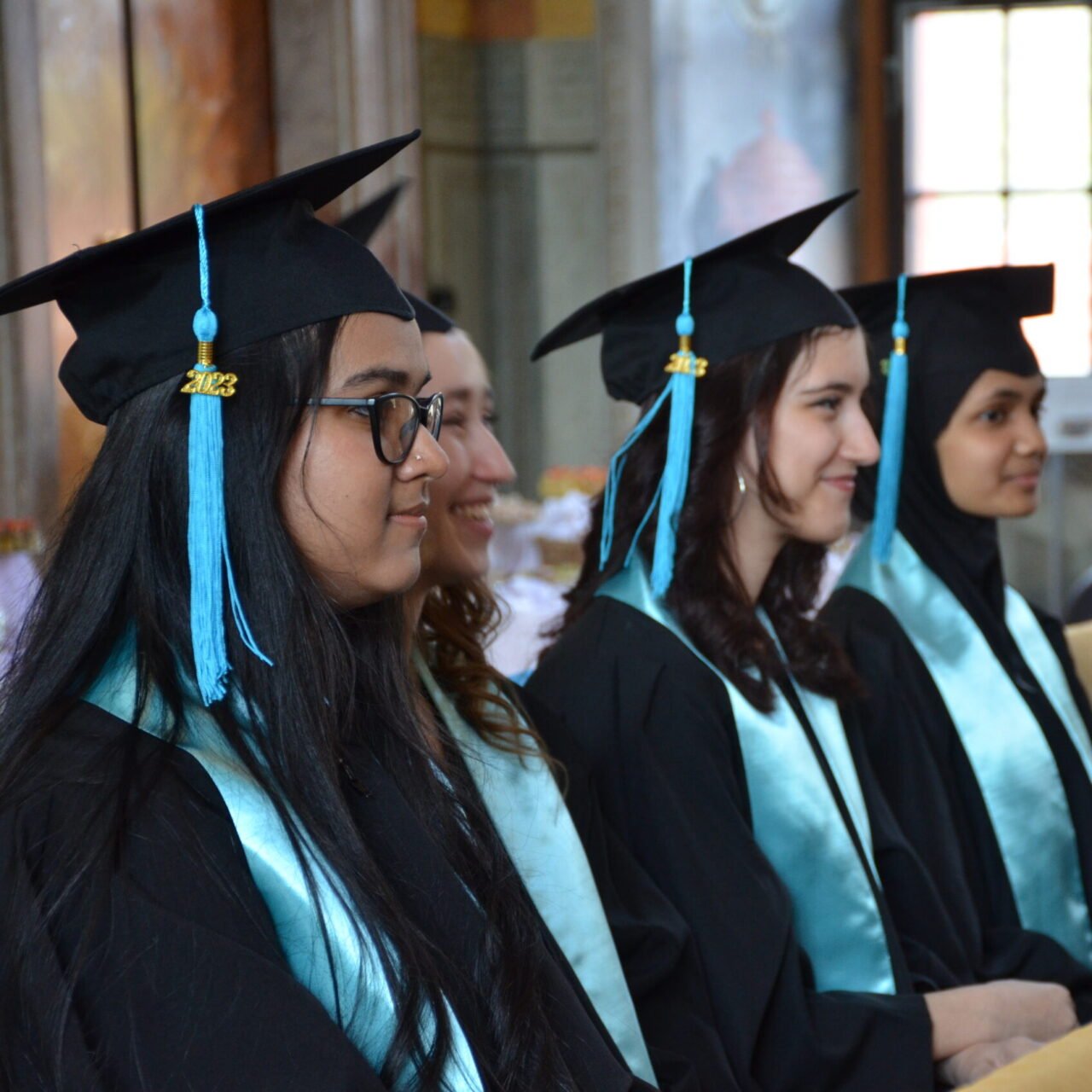
The Golden British Standard: A-Levels as the Gateway to Global Universities
Advanced Levels (A-Levels) represent the pinnacle of the British educational system. The true value of this pathway lies in its academic freedom and deep, purposeful specialisation. Following a broad foundation concluded by the IGCSE examinations, students spend their final two years focusing intensely on just three to four subjects. These are chosen entirely by the students based on their future career and university aspirations. For instance, an aspiring medical student will study Chemistry, Biology, and Mathematics. They will explore these subjects to a depth that frequently mirrors the first semester of a university degree. Crucially, they are not burdened with writing extensive essays on topics irrelevant to their future path.
The final A-Level examinations take place at the end of Year 13 (usually in May and June) and are entirely written. To guarantee absolute objectivity, they are regulated by the British government’s qualifications body, Ofqual, and papers are sent directly to the United Kingdom for external grading. Results are awarded on a scale from A* to E.
For universities worldwide, A-Levels are synonymous with rigorous preparation. They are a passport to Oxford, Cambridge, and Ivy League universities (where students often receive university credits for high A-Levels grades). In Central Europe, they are fully recognised by institutions such as Charles University in Prague and the Central European University in Vienna. The greatest advantage of A-Levels is focused, lower-stress learning: students dedicate their energy solely to what fascinates them, mastering their chosen field. Alongside their studies, Perrott Hill offers a wealth of extra-curricular activities that pave the way for a successful future.
A-Levels: A Perspective by Rob Ford, Executive Headteacher of PHBS Prague
The Swiss Polymath: The International Baccalaureate (IB)
On the other side of international education sits the Swiss-founded International Baccalaureate Diploma Programme (IBDP). Its philosophy is the exact opposite of the British model, prioritizing all-round versatility and a broad academic overview.
Over two years, students must study six subjects across fixed, diverse disciplines (ranging from Mathematics and Sciences to Languages and the Arts). In addition, they must complete three core requirements: a 4,000-word academic Extended Essay (EE), a Theory of Knowledge (ToK) course, and extracurricular engagement via the CAS programme (Creativity, Activity, Service). However, this breadth comes with high rigidity and a heavy workload. A student naturally gifted in the humanities must still pass high-level Mathematics, while a future scientist is required to study literature.
Final exams take place in May under the International Baccalaureate Organisation (IBO), combining year-round coursework with final written papers, with a maximum score of 45 points. The IB diploma holds high prestige globally and is well-regarded by institutions such as ETH Zürich or Erasmus University Rotterdam.
The Local Context: The Czech Maturita
The traditional Czech maturitní zkouška, or shortly maturita, concludes four years of local secondary education and is the standard requirement for entering universities in the Czech Republic. Regulated by the state organisation CERMAT alongside an internal school committee, it combines written state exams in Czech and either Mathematics or a foreign language with oral exams in specialized subjects.
While the maturita is perfectly aligned with the entrance requirements of Czech public faculties, it holds limited international prestige. It remains largely rooted in rote memorisation and a broad, but less deep, knowledge base. Expat students wishing to apply abroad with a maturita frequently face complicated translation processes, official recognition (nostrification) hurdles, and additional language or comparative entry exams.
Comparison: A-Levels vs. IB vs. Czech maturita
| Feature | A-Levels (British System) | IB Diploma Programme | Czech maturita |
| Number of Subjects | 3 to 4 (Complete freedom of choice) | 6 (Mandatory subject groups) | Usually 4 |
| Flexibility | Absolute – Students build their own portfolio | Low – All major disciplines are compulsory | Medium – Compulsory and Optional Subjects |
| Depth of Knowledge | Extreme – Deep specialization in the field | Medium to High (Depending on level) | Broad, memory-based overview |
| Global Recognition | Exceptional | Exceptional | Low to Medium |
When comparing the two international routes, each suits a different type of learner. While the IB offers an all-round perspective for those who wish to keep more doors open, A-Levels offer calculated efficiency and strategic focus.
If a student already has an inkling of their future direction, A-Levels allow them to channel 100 % of their energy into relevant subjects. This develops a depth of knowledge, making them a strong candidate for specific competitive university courses.

Frequently Asked Questions (FAQ)
Can a student sit two sets of school-leaving exams simultaneously?
Some ambitious students in the region attempt to combine the local Czech maturita with an international qualification. While the extreme workload of the IB makes this virtually impossible, the flexibility of A-Levels makes it technically feasible. However, it is highly discouraged. International qualifications are smoothly recognised by Czech universities, meaning it is far more beneficial for students to focus their efforts on one programme to achieve top marks that open doors globally.
Do top global universities value A-Levels as highly as the IB?
Yes, they are viewed as equivalent. For universities like Oxford, Cambridge, Harvard, or top European institutions, A-Levels are the gold standard. For highly specific fields – such as Engineering, Mathematics, or Medicine – universities often actively prefer A-Level students because they possess a deeper foundation in those specific subjects compared to IB graduates.
What if my child has not yet decided on their future career? Are A-Levels too restrictive?
Not at all. An A-Level subject combination can be strategically curated to keep multiple pathways open. For example, choosing Mathematics, English Literature, and Chemistry allows a student to apply for technical fields, medicine, humanities, or economics degrees alike. The key difference is that they select these subjects themselves based on strength, rather than being forced to study subjects they do not enjoy.
Is it true that with A-Levels, students can bypass entrance exams at local Czech universities?
Yes. Many prominent faculties in Prague (including selected programmes at Charles University or the Prague University of Economics and Business/VŠE) waive their standard entrance examinations for applicants who demonstrate excellent A-Level results in relevant subjects.